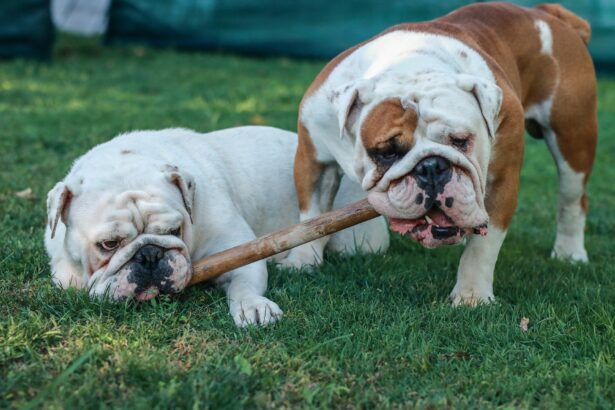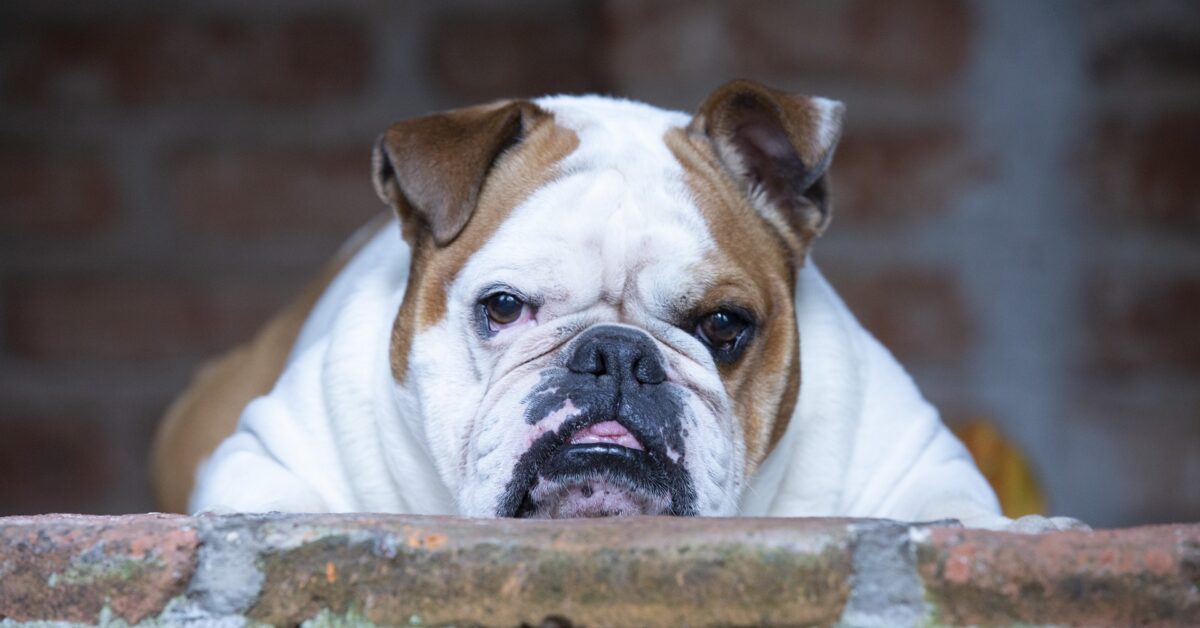
Isn’t it funny how one dog breed can have so many different names? English or British bulldog, Old English bulldog, just bulldog… but when it comes down to the specifics, which name is actually correct? To answer that question we need to dive a little deeper into this breed’s history, so why don’t we go right back to the start?
Old English bulldog
The modern bulldog that we know and love today, isn’t the same bulldog that originally existed. The latter is known as ‘old English bulldog,’ and that particular breed, first mentioned in literature in the 1630s, is extinct.
The original bulldog breed no longer exists.
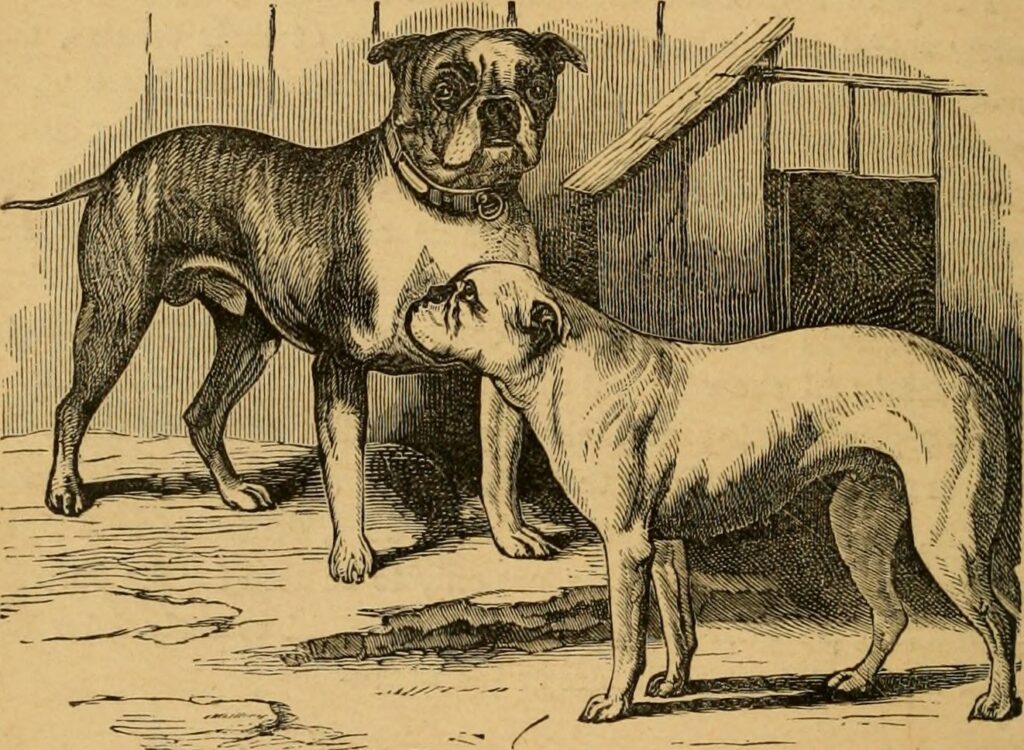
Nobody really knows where the old English bulldog comes from, but it’s mostly accepted amongst historians that they derive from warfare dogs, specifically:
- Alaunt dogs – extinct
- Mastiffs
At one point in history, bulldogs might’ve had ‘mastiff’ in the name and were referred to as ‘small/smaller mastiffs.’
Other theories see the ‘original’ bulldog as old as the 1200s, as stated by the American Kennel Club. A book titled Blue Book of Bulldogs, from 1938, apparently traced the breed back to 1210.
Most people are already aware that [old English] bulldogs get their name from dog fighting and bullbaiting; the breed was used, quite literally, to take down bulls. The 1835 Cruelty to Animal Act put a stop to the cruel practice (finally!) and interest in the breed as a whole took a massive hit.
The bullbaiting might have stopped, but dog fighting sports still continued for some time underground. These fights are believed to have ‘caused’ the bull and terrier, later shortened to just bull terrier, and then the later pit bull and other bull terrier breeds.
English bulldog
The English bulldog and old English bulldog are often confused, with the names used interchangeably. They are, however, two separate dog breeds.
Modern day English bullies are slower, more lumbering, and a far cry from their speedy, athletic, and agile (now-extinct) old English counterparts. They have been specifically bred to be a far cry from their original – shorter limbs, flatter nose and face, and masses of wrinkles that the original breed didn’t have.
Some even say that original bulldogs look more like pugs.
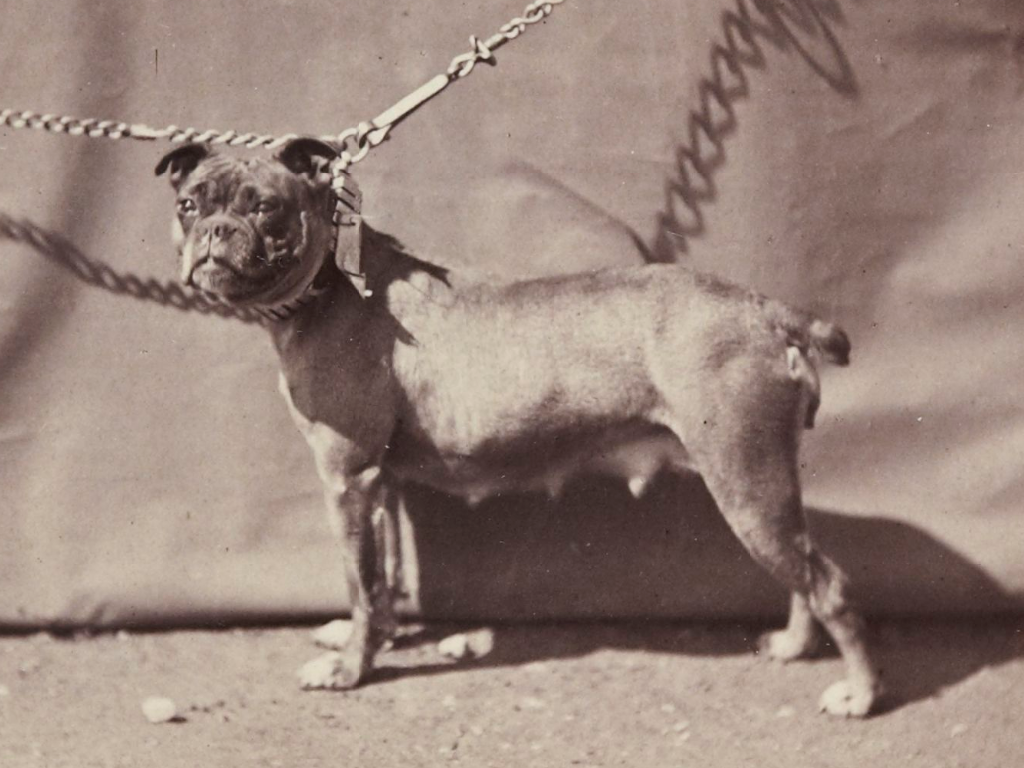
Experts believe that the English bullies we adore today descend from larger mastiff-type breeds in the 1500s or 1600 – the Elizabethan era. Again, though, that is just a theory, albeit the most supported one.
A separate theory into the origin of bully breeds sees the British bulldog as a direct descendant from ‘Pugnaces’ or ‘broad-mouthed dog of Britain’ – a dog once described by the Julius Caesar, all the way back in 54 BC.
I think we have proved, without a shadow of a doubt, that the origins of bulldog breeds are hotly debated, and nobody actually knows for sure where our favourite four-legged friends came from.
Is it English or British Bulldog?
The breed originates in the United Kingdom, which is why it has been given the names British or English bulldog – but which one is correct?
The name for this dog is, actually, simply bulldog.
As Wikipedia states:
“The Bulldog is a British breed of dog of mastiff type. It may also be known as the English Bulldog or British Bulldog.”
Technically, both/none of English/British bulldog are correct – but we’re not going to be that facetious today.
People use the names English or British bulldog interchangeably, usually to differentiate between this breed and other bulldog breeds, such as:
- French bulldog
- American bulldog
- Olde English bulldog (American breed)
- And several other internationally recognised bully breeds
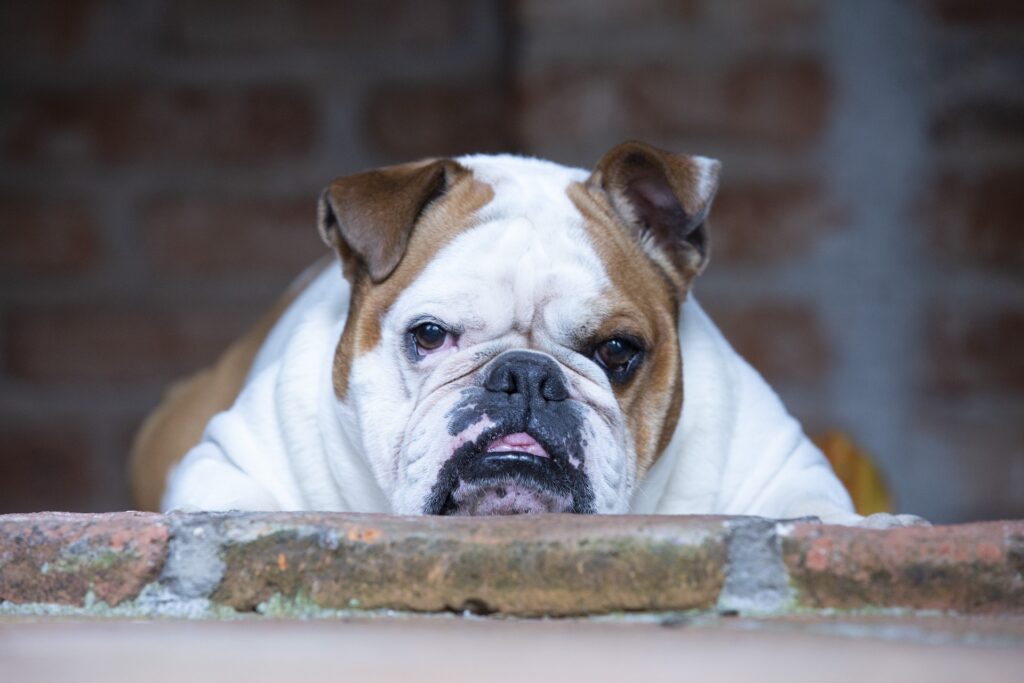
English or British bulldog: conclusion
It doesn’t really matter whether you use English or British bulldog, or even just bulldog; the majority of people will know which pet breed you mean.
If you need advice, guidance, tips, etc., you can search for both English or British bulldog, or even simply just bulldog. The more specific you are, though, the higher the chances of finding the information you’re looking for.
If you’re thinking of adopting a bulldog, congratulations! They are a brilliant breed, with lots of positives… but there are a few negatives, too. If you’re interested in learning more, why not take a peek here: