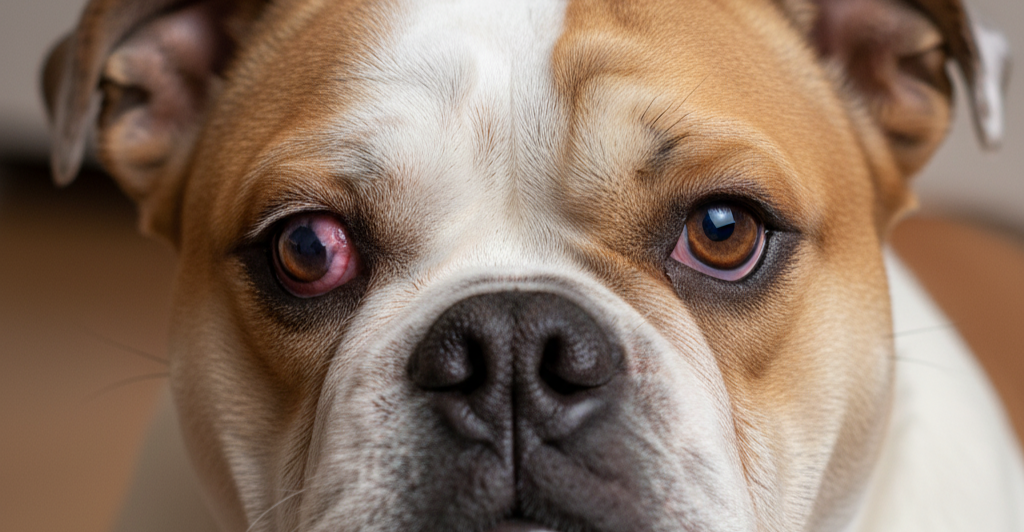
If you’re considering getting a bulldog to complete your family, there are one or two things you’ll need to know about. The chonky breed is well known for a host of health conditions, and cherry eye is just one that you’ll need to know more about. It’s super common in bulldog breeds, and early diagnosis is key for quick and effective treatment.
So, let’s dive right in and unpack cherry eye in bulldogs, shall we?
- What is cherry eye in bulldogs?
- Cherry eye symptoms in bulldogs
- What causes cherry eye in bulldogs?
- How does cherry eye happen?
- When does cherry eye develop in dogs?
- Can cherry eye come back?
- How cherry eye could affect your bulldog...
- How is cherry eye in bulldogs treated?
- Can cherry eye correct itself?
- Cherry eye in bulldogs FAQS
- Can cherry eye happen overnight?
- Why does my bulldog's cherry eye come and go?
- Can cherry eye cause blindness?
- Cherry eye in bulldogs: conclusion
What is cherry eye in bulldogs?
Cherry eye is a condition that mostly affects dogs, particularly certain breeds, but it can rarely afflict cats, too. Bulldogs are one of the most afflicted dog breeds, but pugs, Boston terriers, bloodhounds, shih tzus, and others are also known to experience this eye condition more than others.
As the name suggests, cherry eye affects your bulldog’s eyes. In order to understand the condition, you must first know one or two things about your pup’s eyes.
Dogs (and cats) have a third eyelid. Humans have an upper and lower eyelid, which dogs also have. Dogs have an additional one, and you might have seen it. It’s a white layer, and once upon a time, humans were also thought to have had this third eyelid, too.
The third eyelid adds an extra layer of protection, and it has the scientific name nictitating membrane.
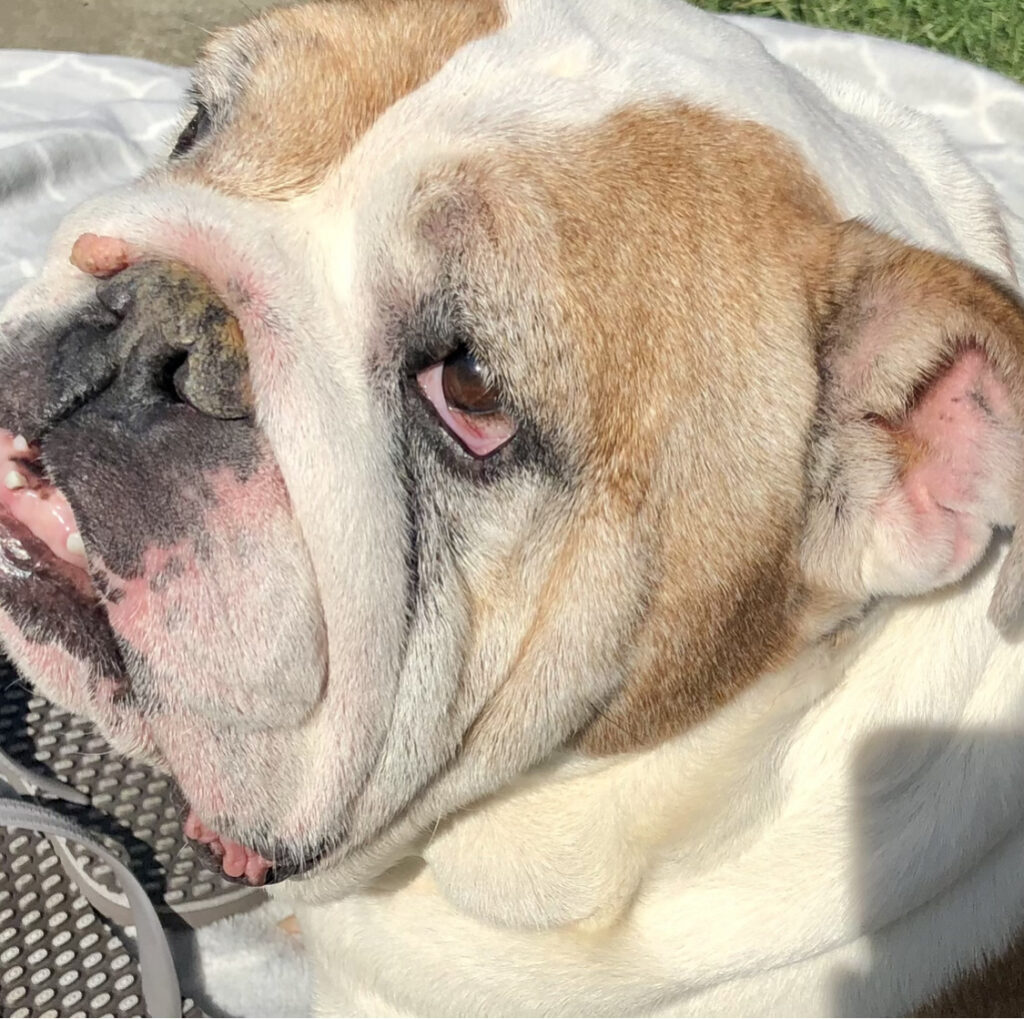
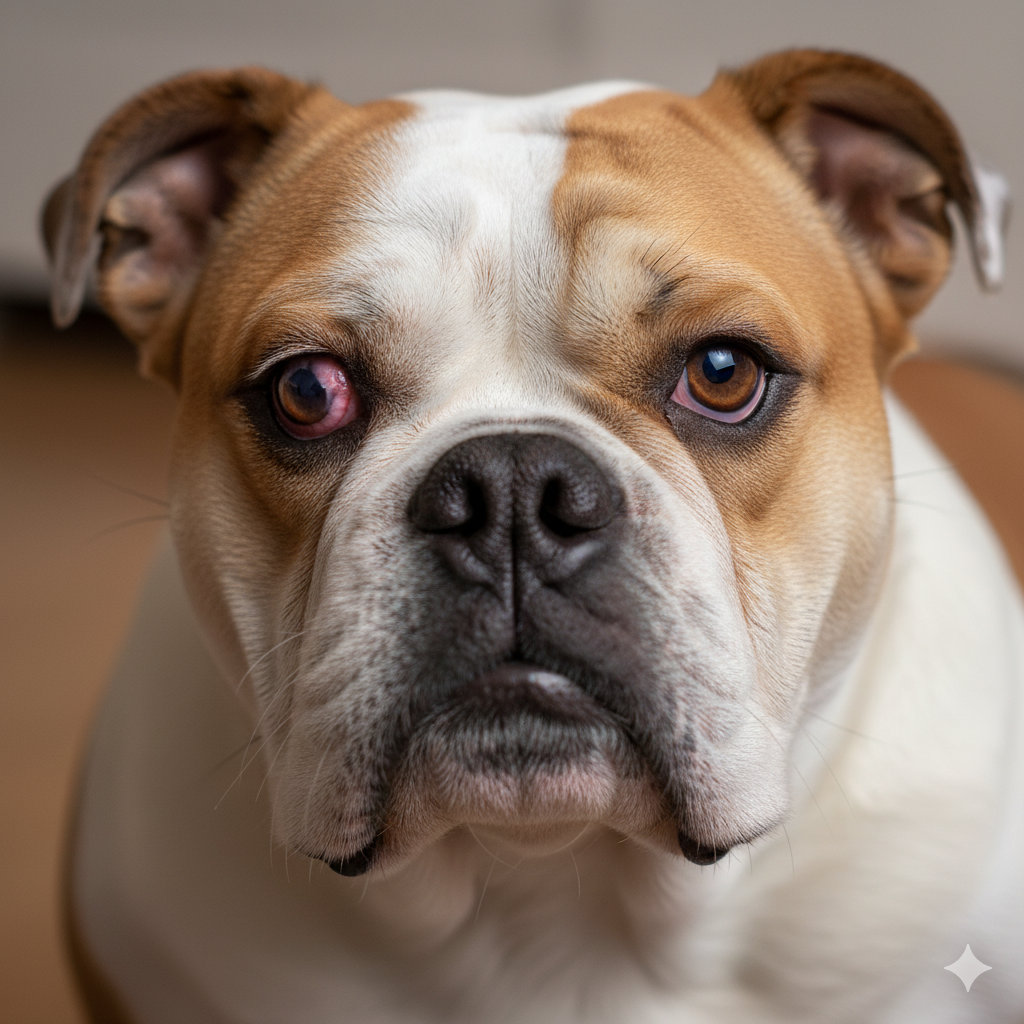
When bulldogs develop cherry eye (or any other breed,) the third eyelid becomes inflamed, swollen, and red. As the membrane or third eyelid swells, it can cover part of the eye, cause lumps or bulges around the eye, and can even affect other parts of the face, such as the nose.
Bulldogs are well known to already have breathing difficulties, so any condition that affects the nose or respiratory system is going to be potentially a lot more dangerous for them.
Cherry eye symptoms in bulldogs
Here are some interesting study results on cherry eye in bulldogs that we think you should know:
- Purebreds have a 1.4 times higher chance of developing cherry eye.
- 1 in every 500 dogs in the UK are diagnosed with cherry eye.
- Brachycephalic breeds (flat-faced) are 6.9 times more likely to develop cherry eye.
- Average age for cherry eye diagnosis is 0.6 years of age (approx. 7 months.)
- English bulldogs are 24.1 times more likely to develop cherry eye than other low-risk breeds. Neapolitan mastiffs have the highest risk and are more than 34 times more likely to develop it.
Obviously, cherry eye affects your bulldog’s eyes, so you should take a good look at them if possible. There’s a chance that your bulldog won’t let you anywhere near their eyes if something is causing them pain or discomfort, though.
You should keep an eye out for the following symptoms of cherry eye in bulldogs:
- A mass protruding from the eyelid corner – pink or white
- Excessive crying/tearing (initially)
- Reduced/no tear production (in later/untreated cases)
- Any kind of discharge coming from the eye(s)
- Pink eye (conjunctivitis)
- Dry eye (keratoconjunctivitis sicca)
- Increased rubbing, pawing, or scratching of eyes and/or face
- Corneal ulcers, damage, or trauma
If you think that something is wrong or otherwise unusual with your pet, get them checked out by a vet. You know your four-legged friend better than anyone else, being their pet parent, so trust your own gut instincts, always.
What causes cherry eye in bulldogs?
Experts and scientists don’t actually know the root cause of cherry eye in bulldogs. It isn’t contagious, so one dog can’t give it to another one. It doesn’t appear to be caused by injury or trauma, either.
Scientists and experts do know, however, that the condition is genetic and inherited. If a parent bulldog has cherry eye, there’s a pretty high chance that at least one puppy in a litter will also develop it. For that reason, it is highly recommended that bulldogs are either neutered or spayed once they have developed cherry eye to prevent it from hindering another generation – and then further potential generations after that.
As awful as it sounds, the cherry eye gene must pass away along with your beautiful bulldog.
How does cherry eye happen?
Cherry eye is, technically, a genetic disorder of the eye that can have flare-ups and flare-downs. It can appear out of nowhere, then disappear just as quickly, as you’ll see as you read through this guide.
The nictitating membrane (the medical word for that third eyelid) isn’t ‘anchored’ properly in dogs with the cherry eye disorder. In dogs that don’t have this condition, the eyelid can turn inside-out, then right itself again, without issues. Cherry eye means that this can’t happen, because the lid isn’t anchored as it’s meant to be.
Without that anchoring, the third eyelid moves too much and too far. It can turn on itself, twist, contort, and fold – and this is what causes the cherry-like mass to protrude out of its original space.
When does cherry eye develop in dogs?
Although cherry eye in bulldogs can appear at any time, it tends to first arise before dogs are two years of age and is more common in younger pups.
One 2022 study showed that dogs that were at a higher risk of developing the genetic condition (see the list below) often displayed their first signs before they were even one year old – in as many as 75% of all cases.
The condition itself is pretty rare, affecting around one percent of all dogs, across all breeds. Certain breeds are disposed to the eye problem, though. This means that they are more likely to get it.
Along with English bulldogs, the following breeds have a higher risk of developing cherry eye:
- French bulldog
- Boston terrier
- Boxer
- Beagle
- Shih tzu
- American cocker spaniel
- Cavalier King Charles spaniel
- Cane corso
- Lhasa apso
- West Highland white terrier
- Bloodhound
- Pug
- Basset hound
- Great Dane
- Neapolitan mastiff
It can also rarely affect cats, particularly in Burmese cats.
Can cherry eye come back?
Yes, cherry eye in bulldogs can come back following certain treatments and/or no treatment. Bullies that have already had a bout of cherry eye are likely to have one or more further bouts, later on in their lives.
Dogs can develop cherry eye in one eye, get it treated, then develop the problem in the other eye.
How cherry eye could affect your bulldog...
Unfortunately for pet parents and vets alike, your bulldog can’t talk. They can’t communicate things like, being in pain, feeling discomfort, or wanting something specific. What they can do, however, is show you. That’s why you should keep your eyes open for things that are out of the ordinary with your pet(s.) Does your bully look like they could be in pain or discomfort? Are they crying more than usual, scratching their eyes (if they can reach) more than usual? Is their behaviour otherwise unusual?
Scientists aren’t sure if cherry eye causes pain or discomfort in dogs. They don’t think it does, but, as previously mentioned, dogs can’t tell us how they’re feeling, so we can only assume with evidence to back the assumptions.
Cherry eye can affect your pup’s sight, particularly if left untreated.
The complications of untreated or unmanaged cherry eye can also become a hindrance, both to your doggo’s sight and quality of life. The prolapsed (hanging out) eyelid becomes very dry and itchy, and it can get bashed and bumped, resulting in trauma. (We all know how boisterous bullies can be!)
Infections, excessive swelling, redness, and other medical issues can develop as a result of the internal eyelid being on the outside of the body – where it is not meant to be.
Bulldogs are also likely to develop dry eye syndrome, known medically as keratoconjunctivitis sicca, if cherry eye is left untreated.
How is cherry eye in bulldogs treated?
In some cases, with some dogs, the cherry eye (protruding third eyelid) will resolve itself without the need for medical intervention, but this tends to be on the rarer side. Most dogs require some sort of medical treatment, particularly bulldog breeds.
Cherry eye bulldog treatments often include one or more of the following:
- Antibiotics
- Steroid treatments
- Massage techniques
- Surgery
Just a few years ago, surgery for cherry eye in dogs required complete removal of the gland (third eyelid) entirely, but research later showed that this actually did more harm than good. That eyelid is vital for tear production, which in turn is vital for lubricating, cleaning, and protecting the eyes. The removal of it was said to reduce production of tears by as much as 30%, having a detrimental effect on eye health.
Surgery now involves replacing or anchoring the third eyelid – keeping it intact, getting rid of the cherry eye protruding mass problem, and removing the effects of removal-related issues.
Blue Cross states:
“Surgery is normally needed to treat cherry eye.”
You can find more information on surgery for cherry eye in bulldogs in our complete guide right here.
Can cherry eye correct itself?
Yes, in some cases, cherry eye does go away by itself. Not all cases, of course – but the condition going away without medical intervention seems to happen fairly often.
Southern Animal Hospital states:
“About 20% are not a long term problem and can initially be managed until they resolve.”
One Reddit user, on the other hand, reported booking an appointment with the vet for their French bulldog’s cherry eye issue, and the issue miraculously disappeared before the appointment day even arrived!
Cherry eye in bulldogs FAQS
Let’s now answer some of the common cherry in bulldog questions that we haven’t yet covered in this no-crap guide… because it’s always better to be overinformed than underinformed!
Can cherry eye happen overnight?
Yes, the cherry-like mass can develop overnight. This seems to happen a lot with younger doggos; they go to bed fine, then wake up with a mass on the corner of their eye.
Why does my bulldog's cherry eye come and go?
Because the third eyelid isn’t anchored as it should be it can move fairly freely. This means that it can prolapse and come out of the space, but it can also un-prolapse and return back in.
Can cherry eye cause blindness?
Cherry eye itself doesn’t cause blindness in bulldogs or other breeds, but complications from cherry eye and/or untreated can lead to vision impairment or even full blindness. These include dry eye, damage or trauma to the eye, pigmentation from irritation or inflammation, and damage to the cornea.
Cherry eye in bulldogs: conclusion
You have reached the end of this no-crap guide to cherry eye in bulldogs – and we really hope that we’ve answered any and all questions you might have. The one thing that we repeatedly say – and will keep repeating is this: if you notice anything out of the ordinary with your doggo, get them checked out by a vet.
You know your four-legged friends better than anyone else, so always follow your gut.
If you’re interested in learning more about cherry eye in bulldogs, why not take a peek at these articles on Planet Bulldog: