Neutering male English bulldogs is one part of pet parenthood that is virtually impossible to skip or miss. One distracted wrong move in the park could lead to countless puppies that are partially your responsibility. Intact bullies can also bring a wealth of bad behaviours that you definitely don’t want, too.
There are pros and cons for neutering male English bulldogs – and we think that it is vital that you understand everything on each side of the debate before making a final – and permanent – decision.
Why don’t we start at the beginning and go from there?
- What is neutering for bulldogs?
- Best age for neutering male English bulldogs
- How much does it cost to neuter a male English bulldog UK?
- Start to finish: neutering male English bulldogs
- Initial consultation
- Pre-surgery
- Surgery day
- Surgery: castration
- Post-surgery
- Pet collection
- Post-neutering changes
- Bulldog neuter recovery
- Final check-up
- Advantages of neutering male English bulldogs
- Preventing unwanted pregnancies
- Lower testicular cancer risks
- Longer-living bulldogs
- Population and bad breeding control
- Potentially eliminate bad behaviours
- Reduced risk of prostate problems
- Reduced risk of urinary issues
- Reduced vet bills
- Disadvantages and risks of neutering male English bulldogs
- Surgery risks
- Anaesthesia risks
- Joint and/or orthopaedic issues
- Potential increased risk of other cancers
- Potential increased risk of hypothyroidism
- Behaviour might not change
- Potential weight gain
- Incontinence and other urinary issues
- No chance of puppies
- Fur/coat changes
- Neutering male English bulldogs: FAQs
- How long does neuter surgery take for English bulldogs?
- What is English bulldog neuter recovery time?
- Neutering male English bulldogs: conclusion
What is neutering for bulldogs?
Neutering or castrating male bullies involves a surgical procedure, usually done under general anaesthetic, that removes the testicles entirely.
It’s done with the intention of preventing unwanted pregnancies, but there are other benefits or advantages to having your male doggo neutered. Keep reading and you’ll find out all about those.
The surgery itself is considered low risk generally, but your veterinarian should/will go through side-effects, potential risks, recovery time and process, and everything else.
Don’t forget or be afraid to ask questions. That’s what your vet and their assistants are there for, and they’d be a terrible vet if they refused or couldn’t provide answers. You have the right to be fully informed of what your pampered and prized pooch is going to experience.
Best age for neutering male English bulldogs
There is no real ‘set’ age for castrating or neutering a male bulldog. Different vets and experts often have differing opinions to the best or ideal age.
The Kennel Club states:
“Most dogs are usually neutered between six months and two years of age.”
The website also states, however:
“The ‘best’ age to have this done is often debated, but your vet will be able to guide you using the latest research and guidelines… depends on your dog’s breed, size and sex.”
Most vets will accept puppies for neutering at around six months of age, according to Vets4Pets; but again, the website does state:
“This may vary dependent on your pets breed and weight.”
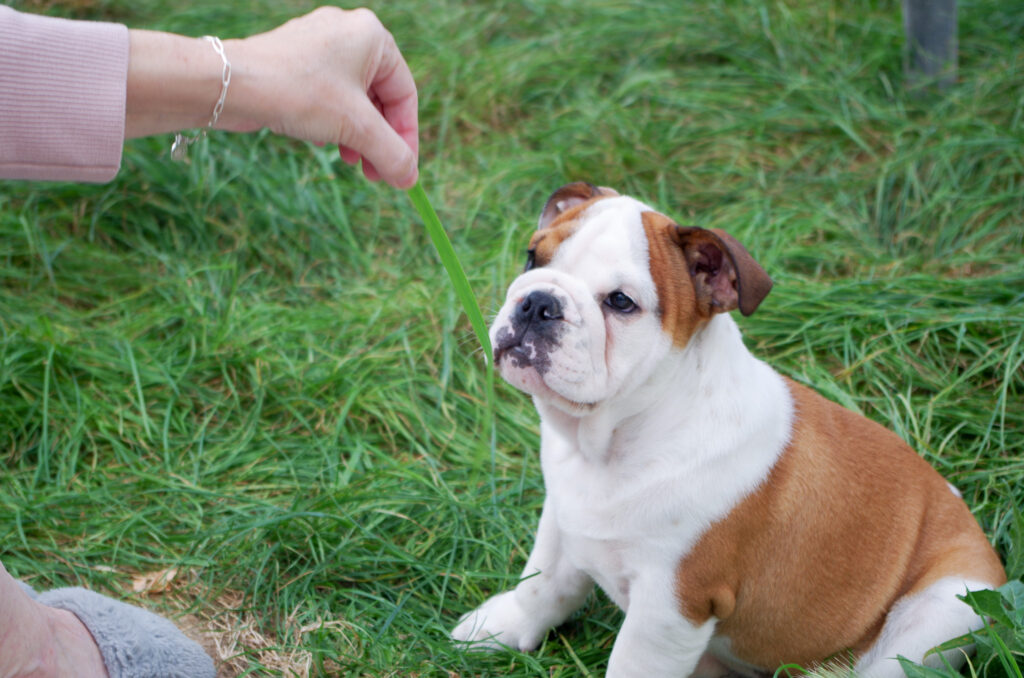
Many bulldog-specific vets and experts recommend waiting until your English bulldog is at least one year of age before neutering, if your circumstances allow it. Obviously, if there’s a chance that you’ll face unwanted pregnancies, earlier is better.
Some experts even suggest waiting until male English bulldogs are at least 18 to 24 months old. There appears to be a few links between early castration in bulldogs and certain medical conditions, but more research will need to be done before we can say, one way or the other.
What we can say, however, is what the minimal stats seem to show so far: early surgical procedures, such as neutering or spaying, can/might come with higher risks of bulldogs developing the following:
- Elbow and/or hip dysplasia
- CCL tears or trauma
- Bone cancer
- Mast cell tumours
- Blood cancers, such as lymphoma
How much does it cost to neuter a male English bulldog UK?
Male doggos are easier to neuter than females getting spayed, so it’s often a little cheaper for males than their counterparts. We’ve done some research and collated a few prices, from different vets and experts, so you can make the best decision in terms of cost:
- Between £100 and £400, according to The Kennel Club
- £323.33 on average, according to ManyPets
- £175.57 for 7-14kg bulldog + £38.53 brachycephalic breed general anaesthetic fee, from House & Jackson
- £210 for 20kg + age 2 or below dog, from Priory Lodge Vets
Start to finish: neutering male English bulldogs
I’m now going to walk you through the entire process of neutering male English bulldogs, from start to finish, so you know exactly what to expect, with no nasty surprises.
Let’s start with the first point of contact: you, telling your vet that you’d like to have your male bully neutered.
Initial consultation
When you first call your vet to make a neutering or spay appointment there is likely to be an initial consultation. During this, your vet will (should) tell you everything that you need to know about the procedure – including what happens before, during, and afterwards. You’ll be informed of the risks and disadvantages alongside the advantages and pros.
The vet will give your doggo a health check, making a note of things like:
- Age
- Weight
- Other health conditions or concerns
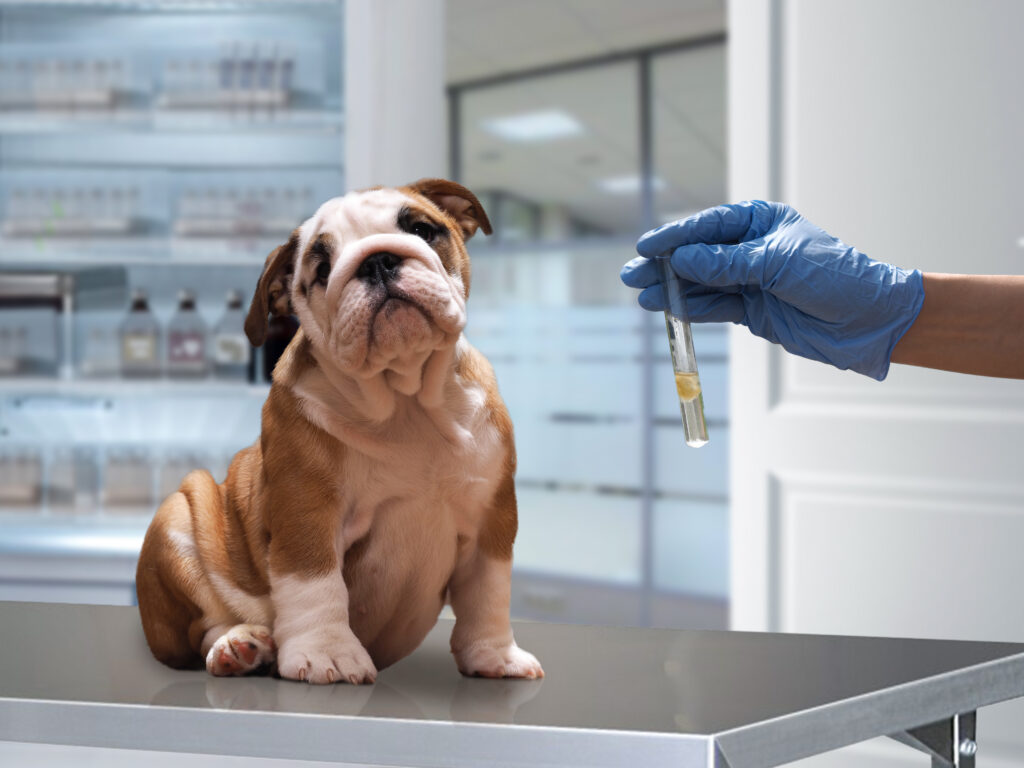
They might also take urine, faeces, and/or blood samples for analysis. It might seem pointless or a lengthy process, but it is designed to ensure that your bulldog is perfectly fit and healthy before subjecting them to anaesthetic, surgery, and the aftercare or recovery process.
If your pet does have health concerns, your vet will take this into account when making a yes/no decision on neutering – with you. Certain medications can interact with anaesthetic, requiring either more or less of the latter for surgery. Weight can also be problematic for anaesthetic and surgery, especially with brachycephalic (short/flat-nosed breeds.) Bigger dogs also need higher amounts of anaesthetic, which will, in turn, require extra care and precautions… particularly with doggos that have breathing issues.
Neutering isn’t recommended for all male bulldogs, and it’s something you’ll need to discuss with the vet during the initial conversation or consultation.
Pre-surgery
Surgery that requires anaesthetic usually also requires a period of fasting (no eating) beforehand. You might think this step unimportant and want to skip it, but letting your bulldog eat within the fasting period can result in them vomiting up, then inhaling that food during the neutering procedure, which can lead to choking, lack of oxygen to the brain, and much, much worse.
Always follow your vet’s instructions. They’ve paid good money to earn the knowledge they have. Providing you have opted for a fully qualified, licensed, and trained vet, they should also have the certificates and other paperwork to prove it.
Why would you pay to use a vet’s knowledge and expertise, then ignore it, leading to potential health complications for your four-legged friend(s?)
If they haven’t been done already, your vet will want to perform pre-surgery blood tests very close to the day of surgery. This is, once again, to ensure that your pet is as fit and healthy as they need to be, for the procedure to go ahead.
Surgery day
On the day of surgery, you’ll need to take your doggo to the veterinary surgery for the procedure. Again, if you haven’t already done so, you’ll be asked to sign paperwork to confirm that, yes, you definitely do want your bulldog to go under general anaesthetic and have surgery to neuter them.
You’ll also be asked to confirm that you have followed advice and instructions, including making sure that your bulldog has fasted for the appropriate length of time.
Some vets will let you stay in the waiting room for the procedure, but you will likely not be allowed to follow your bully beyond the waiting room and consultation room. Most vets recommend going away, getting something to eat, doing things at home, etc., until it is time for you to collect your pet. This allows the professionals to get on with their jobs, then monitor your doggo for a period of time afterwards.
Once they’re happy that your pet is going to be just fine, they’ll get in touch with you/their designated pet parent, so they can go and pick them back up.
Surgery: castration
When it’s time for you to leave and your male English bulldog to get castrated, your vet will start by giving them a general anaesthetic. This ensures that they are fully sleeping, unable to feel what’s going on, and won’t feel any pain. Your vet may also prescribe or administer pain relief – either at this point, during the procedure, or afterwards.
The anaesthetic is usually administered via an injection in one of the two front legs first. The area is shaved for easier access and to allow vets and nurses to better see the veins and arteries.
Further anaesthetic is given to your bulldog while they’re already ‘asleep,’ in the form of a gas, often with a mask to the face.
Your bulldog is constantly monitored while they’re under general anaesthetic – visually alongside breathing rate, temperature, and heart rate. If there are extreme changes to heart rate (etc.,) your vet will stop the procedure and only continue if the problem can be and is resolved.
Another section of fur or hair will be shaved off, across the lower abdomen. The shaved area is usually a lot, lot bigger than the actual incision area, which can look somewhat frightening, but there are several reasons behind this, including easier sterilisation purposes.
An incision will be made once the area has been shaved, cleaned, and properly sterilised. The testicles will be severed from the rest of the internal organs and structures, then removed from the body through the incision.
Once the testicles have been removed, your veterinary surgeon will then close everything up, using stitches – the skin, tissue (fat,) and muscle tissue stitched closed separately, so that each layer heals properly and without causing your bully any problems in the future.
In some cases, your vet will use disposable stitches, which will dissolve and fall away in time, without the need for a return trip to have them removed.
If these aren’t suitable, ‘regular’ stitches will close the incision up and you will need to return on a later date, with your doggo, to have them properly cut out and removed.
Post-surgery
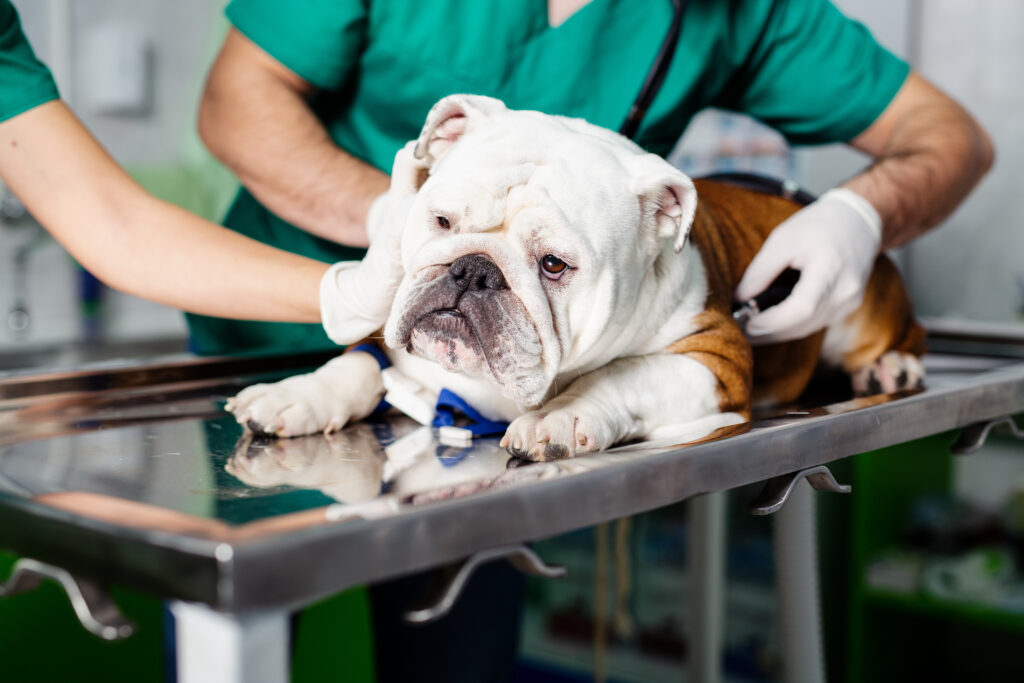
Although your bulldog would’ve been given an IV anaesthetic, the gas (via the mask) is what keep them asleep and unable to feel pain or what’s going on. Once the mask is removed and your doggo is no longer inhaling the anaesthetic gas, they will wake up within around ten minutes.
They won’t be fully awake, of course; their experience with anaesthetic isn’t too dissimilar to that of humans. They will feel groggy, confused, discombobulated, disorientated, and all sorts of other adjectives that generally mean ‘not great.’ Anaesthetic can even make otherwise calm and soft doggos mad and snappy!
Dogs are monitored throughout their wakeup journey, as are their vitals – temperature, heart rate, etc.
Once they are fully awake, vets will want to make sure that your doggo is in tip-top condition. This is usually done by offering food – and we all know how food orientated our boisterous bullies can be, right?! If they won’t eat their favourite food, post-anaesthetic, vets can take a closer look to make sure that they are recovering as they should be… and why not, if they aren’t.
Pet collection
The majority of male bulldog neuter operations are done and dusted on the same day. If you take your doggo into the veterinary surgery in the morning, there’s a pretty good chance that you’ll be able to collect them that very afternoon. This isn’t always the case, of course; some dogs require a little more monitoring or aftercare than others – and that’s perfectly okay! The best place for them to be is at the vet… despite how awful it might feel for both bully and pet parent.
If your bully can reach ‘down there,’ they’ll probably need to wear the cone of shame. Frank can’t get that far down, and nor could George (RIP.) If the vet tells you that your doggo needs the cone, they need the cone. It’s to prevent them from scratching, licking, or otherwise harassing the wound – both the IV point on the leg and the incision for castration.
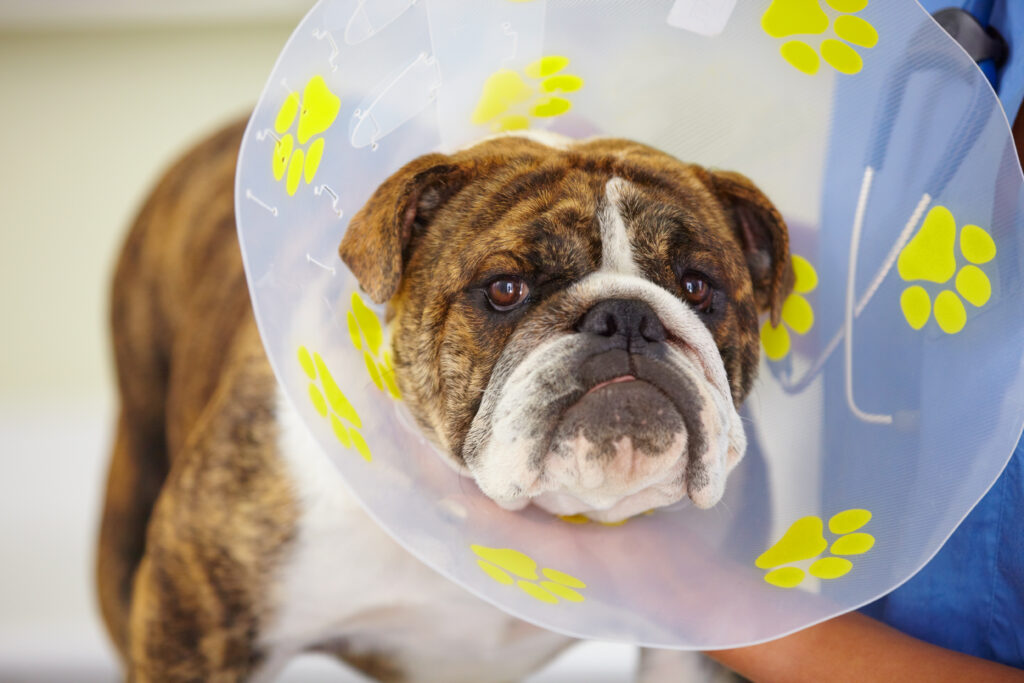
The effects of your doggo’s anaesthetic can take a while to wear off properly – up to 24 hours or perhaps more in some cases. During this time, they might vomit, stagger around, fall over or down, become very confused and disorientated, and might even grow scared or fearful. For this reason, it’s best to confine them to a small space for the initial recovery time. This prevents excessive moving around directly after what is major (but routine) surgery.
Your vet will also tell you how to properly care for your English bulldog and their new wounds over the coming days and weeks. You should pay attention to these instructions and follow them word-for-word. Why? Because they’re designed to prevent infection, promote healthy healing, and to get both you and your doggo back to a regular routine as soon as possible.
Your vet will not prescribe medication, such as antibiotics, for home recovery, aside from (occasionally) pain relief unless there are complications or recovery problems.
Post-neutering changes
Things will change a little for your bulldog post-neutering. Your vet will tell you about such things, plus how to combat them – including how to stop your male bully from putting on lots of weight after they’ve been neutered.
You’ll need to put certain restrictions on your pet until you’ve been given the all-clear by your vet, and this includes things like:
- Absolutely no jumping up to avoid opening wounds or splitting stitches
- No running around
- Limited movement
- Reduced roughhousing or play
- Using puppy training pads
- Forgiving little accidents (pee, poop, and/or vomit)
- Wear the ‘cone of shame’ or a protection vest to avoid licking, scratching, etc.
- Book, then attend all necessary follow-up appointments
Dogs need fewer calories once they’ve been neutered, so your bully’s diet will need to change. As with any ‘big’ changes, always check with your vet before you make them – and always listen to your vet’s recommendations and advice. They’re dishing it out to keep your bulldog safe and you, their pet parent, happy!
Bulldog neuter recovery
You will need to take your doggo back to the vet, a couple of days after the procedure – within around 2 to 5 days, for a checkup. Once again, the vet will check your bulldog’s vitals and wounds, making sure that there are no abnormalities or issues alongside redressing if necessary.
Final check-up
There is usually a second and final check-up approximately 7 to 10 days post-surgery. At this appointment, your vet will let you know if things are okay with your bulldog – and if they are, it’ll be the last time you’ll need to see them for the neutering process!
Advantages of neutering male English bulldogs
As previously promised, we’re going to take a deep dive into both the advantages and disadvantages and/or risks of neutering male English bulldogs, so let’s start with the good… and then, we’ll work our way to the bad.
Preventing unwanted pregnancies
The number one advantage to neutering male English bulldogs is, of course, to prevent unwanted litters of puppies. Your male doggo can’t get pregnant, but unspayed females in your house can – as can unspayed females on walks, in the park, and around your local neighbourhood.
Unwanted pregnancies lead to unwanted puppies, dumped dogs, badly treated dogs, and much more besides – all bad for the environment, resources from local authorities, and the poor doggos themselves.
Lower testicular cancer risks
Getting your male English bulldog neutered greatly reduces the chances that they will develop testicular tumours and/or cancer later on in life.
As Battersea Dogs & Cats Home states:
“Neutered male dogs are at a lower risk of testicular tumours.”
Longer-living bulldogs
The American Veterinary Medical Association (AVMA) has something very interesting to say about neutering (and spaying) your four-legged friends:
“Studies have repeatedly shown that spayed or neutered dogs and cats live longer, on average, than other dogs and cats.”
George the Bulldog (RIP) was rescued intact, had a brush with testicular cancer, then underwent castration – and he lived to an impressive 12 years of age, which proves the longer-living bulldog theory!
Population and bad breeding control
Controlling if and when your dog gets pregnant or gets another doggo pregnant is a great way to help control the population of puppies and bad breeders. There are so many unwanted puppies being sold on unchecked pet sites and dumped bullies in shelters.
Please, don’t add to that problem if you don’t have to.
You might be the best bulldog pet parent in the world… but can you guarantee that the female dog’s pet parents are, too?
Potentially eliminate bad behaviours
Some behaviours are reduced or even potentially eliminated entirely with the removal of testicles and, in turn, reduced male hormones. This isn’t guaranteed, of course, but it is one of the first things that vets and doggy behavioural experts will recommend, to combat unwanted or bad behaviours and habits.
Neutering male English bulldogs (along with training) can reduce issues and bad behaviours such as:
- Humping/mounting
- Aggression
- Snappiness
- Jealousy and possessiveness
- Territory scent marking (urine spraying)
- Running away on walks (to find mates)
- Pestering female dogs
Reduced risk of prostate problems
All prostate-related conditions are reduced in male English bulldogs that have been neutered, including:
- Prostate enlargement
- Prostate infections
- Tumours and/or cancers of the prostate
English bullies are known to experience enlargement of the prostate glands, known medically as benign prostatic hyperplasia – and the risks of this are also reduced with neutering male English bulldogs.
AVMA also states:
“Neutering males can eliminate their risk of testicular cancer and reduce their risk of developing enlarged prostate glands.”
Reduced risk of urinary issues
Urethral prolapse is, unfortunately, a fairly common problem for English and other bulldog breeds, and the condition is also fairly unique to the boisterous bully, too. Neutering can dramatically reduce the risks of male bulldogs developing not only this urinary condition, but also other urethra or urinary-based medical issues, too.
Reduced vet bills
With the reduced risk of things like prostate issues and testicular tumours and/or cancer, you can expect your vet bills to be lower than pet parents who don’t neuter English bulldogs.
Neutering male English bulldogs also reduces impulsive roaming and running-away behaviours, which can result in things like traumatic injuries, vehicle accidents, and much worse – all of which, of course, will likely cost money in vet fees to resolve or make your poor doggo healthy again.
Eliminating the chances of your male English bulldog getting another dog pregnant also reduces the risks of you being asked to pay towards the female dog’s vet bills!
Disadvantages and risks of neutering male English bulldogs
We’ve previously tiptoed into the risks and disadvantages of neutering male English bulldogs (and spaying female bullies,) but I think it’s only fair that you know everything there is about the surgical procedure – and the potential side effects – before making a decision that is permanent and irreversible.
This quote, from a research paper under the topic, ‘Effective Options Regarding Spay or Neuter of Dogs,’ sums things up quite nicely:
“Recent research reveals that for some dog breeds, neutering may be associated with increased risks of debilitating joint disorders and some cancers, complicating pet owners’ decisions on neutering.”
That same research also supports the idea that early castration or sterilisation leads to higher risks, with emphasis on waiting, if possible, until English bulldogs are at least 18 months old to neuter them.
Let’s now take a closer look at the complete list of disadvantages and risks of neutering male English bulldogs:
Surgery risks
Surgery, generally, comes with its own set of unique risks and hazards, including things like infection, anaesthesia complications, bruising, excessive bleeding, blood clots, poor or delayed healing, and wound complications and issues. Some of these risks or side effects are more common than others – but they’re all things that you’ll need to consider before sending your English bulldog off for surgery.
Anaesthesia risks
Flat-nosed or brachycephalic breeds, such as English and French bulldogs, face increased risks with anaesthesia, mostly relating to breathing concerns. The airways of flat-faced breeds are pretty unique, and the anaesthesia along with equipment can make breathing more difficult – not just during the procedure but afterwards, too.
Anaesthesia with any dog can come with complex issues, but that is especially the case for:
- Older doggos
- Overweight doggos
- Doggos with existing medical conditions
- Flat-nosed breeds
Joint and/or orthopaedic issues
Studies have shown that neutering your doggo too early, before their joints and bones have had a chance to properly develop, can lead to joint and orthopaedic issues later on in life. This includes issues such as:
- Elbow dysplasia
- Hip dysplasia
- CCL ruptures or tears
- Mobility issues
Potential increased risk of other cancers
Some studies have shown a potential link (not a definitive link) between getting your bully/male dog neutered and heightened risk of certain cancers, including:
- Blood vessel lining cancer (hemangiosarcoma)
- Bone cancer (osteosarcoma)
- Prostate cancer
More studies are currently underway to determine one way or the other whether or not these links are true… or if they’re simply rare anomalies. These are links that you – a pet parent – should be aware of, though.
To be informed means being informed of both sides of the argument before making a decision.
Potential increased risk of hypothyroidism
Hypothyroidism is an underactive thyroid, and there might be a link between neutering male dogs and an increased risk of developing the thyroid condition. Again, these results are undetermined and still in the early days of research, but it’s something that you probably should mention to your vet if you’re worried.
Behaviour might not change
If you’re getting your male English bulldog neutered with the intention of it calming down testosterone-driven behaviour, you might be sorely disappointed. In many cases, neutering alone doesn’t fight or combat learned bad behaviours, especially without training and things like positive reinforcement.
Solving behavioural issues in dogs, particularly stubborn bulldogs, is rarely a one-trick-fix affair. More often than not, you need to layer or combine ‘fixes.’
Potential weight gain
As previously mentioned, some doggos require fewer calories and a little more exercise after neutering surgery – and this is because their metabolism might change with the reduction of testosterone.
Your vet will more than likely give you a dietary or calorie plan to follow post-surgery along with an idea of how much less you should feed your English bulldog. We highly recommend following those instructions because they’re actually there to help you and your pet!
Incontinence and other urinary issues
In some rare cases, dogs can experience increased risks of developing urinary conditions and issues after they have been neutered, including cancers of the urinary tract and conditions that cause either temporary or permanent incontinence.
Again, this is fairly rare… but is still worth discussing with your vet before making a final and permanent decision.
No chance of puppies
I know that you’re probably interested in neutering male English bulldogs to completely avoid the expense and hassle of puppies (alongside the other benefits,) but neutering is about as permanent as you can get. There’s no safe process to reverse neutering, so there’s no chance of puppies in the future… should you change your mind.
Fur/coat changes
In certain dogs, commonly golden retrievers and Irish setters, the hormonal changes that occur after they have been spayed or neutered, can change their features, particularly when it comes to fur and/or coat. Spay coat is a relatively common phenomenon that causes their fur to change to super fluffy, much drier, woolly, and often very dense.
Neutering male English bulldogs: FAQs
Let’s take a look at some of the common questions that vets are asked before neutering male English bulldogs, then answer them… because we’re nice like that!
How long does neuter surgery take for English bulldogs?
Several factors come into play when determining how long neuter surgery will take for English bulldogs, including:
- Health of the bully
- Underlying medical issues
- Weight
- Anaesthesia compatibility
- Vet confidence
- Other complications
- Ease of removing the testicles and/or stitching up
On average, it takes approximately one to two hours to fully neuter an English bulldog. Some will come in at the 30-to-45-minute mark; others will take more than an hour. It all depends on the specific doggo, the specific vet, and lots of other variables in between.
The varying timescale is just one of many reasons why your vet will ask you to leave the surgery, then come back when the procedure is all done and dusted. They can’t always give you the correct timeframes in advance.
What is English bulldog neuter recovery time?
For the first 24 to 48 hours after your dog’s neuter surgery, they’ll be disorientated, confused, unsteady on their paws, and probably much sleepier than usual. This is normal; they are the normal after-effects of anaesthetic on dogs, particularly sleepy breeds.
During this initial period, it is also common for the following to occur:
- Vomiting
- Diarrhoea
- Lack of interest in food, treats, and/or water
- Quieter demeanour
- Little to no movement
- General feeling-sorry-for-themselves appearance
Day 3 to day 7 will see the return of the furry terrorist that is your English bulldog. During this week, your dog’s energy levels will return to almost normal, as will their appetite.
We can’t say the same for their attitude, though. Chances are, your doggo is going to be stubbornly mad at you for a while – for having the tennis balls to take away their tennis balls! (If you know what we mean…)
The healing process is in full swing during the first week, and it is vital that you follow your vet’s instructions to the letter and keep your doggo’s bouncing and bulldozing about to a minimum!
Day 8 to 14 will usually see the dissolvable stitches completely dissolved; though, your vet might need to take a few stubborn remainers out during the final check-up. Providing your bulldog’s wound is healing nicely, their activity levels can start going back to how they were before.
Day 15 onwards will see the hormonal changes becoming more and more obvious. They won’t happen right away, and there’s a high chance that it’ll take you longer than even this to notice any real changes with their behaviours or habits.
By this point, your dog’s physical wound should be pretty much completely healed. Their emotional wounds might take a little more work, though. They deserve (and should get) lots of extra love, fusses, and pets following major surgery like neutering!
Neutering male English bulldogs: conclusion
Neutering your doggo is a major decision – and not just for them! There are many things for you, their pet parent, to take into account, and no one would blame you for wanting to take some time to think things over.
Thankfully, you do have time! As we’ve discussed in great detail in this guide to neutering male English bulldogs, the later you can leave it with this breed, the better it will be for the pair of you. 18 to 24 months seems to be the sweet spot, but your vet will gladly answer any questions you have.
We hope that we’ve managed to answer any questions you have for now, but feel free to leave any that we’ve left out in the comments below this post. Have you decided to neuter your male English bulldog? If yes, why? If no, why not?
Leave your precious words of wisdom below so that future bully pet parents know exactly what to do and expect.