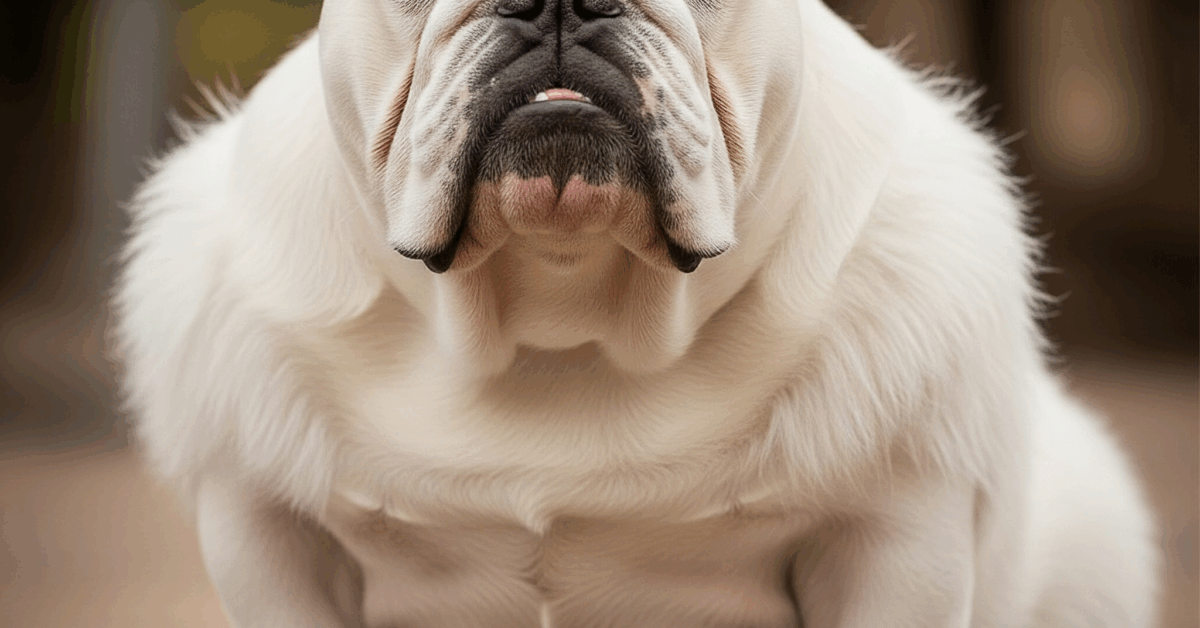
If you’ve been looking for a new English bulldog to add to your family, you might have already noticed “fluffy” English bulldogs. They are exactly the same as their non-fluffy versions, but instead of the short coat, they have a plush, curly, fluffy coat instead.
This relatively new breed of bully is stunning to look at, but the truth of fluffy English bulldogs, and their history, has quite the tale to tell.
Let’s get to it.
What are fluffy English bulldogs mixed with?
Fluffy English bulldogs, also known as teddy bear English bulldogs, aren’t actually mixed with another breed. They’re also not even a recognised breed, and the French fluffy bulldog is actually more popular and common. (But still pretty rare.)
The fluffiness of an English bulldog’s coat has nothing to do with breeding (unless specifically crossbreeding,) and is actually down to a little something in their DNA.
Bulldogs with fluffy coats have different DNA to their standard, short-haired cousins.
Why don’t I explain the basics…?
What are fluffy English bulldogs?
Fluffy English bulldogs are actually rare and a result of deliberate breeding between one or two bulldogs that have been tested and shown to have a different genotype, or are visibly fluffy. (Obviously.)
The affected genes are fibroblast growth factor 5 (FGF5.) This controls how fast a dog’s hair grows, when it should stop, and what type of hair they have. This can be genetically tested. When the genes have mutated, the body’s process is disrupted – particularly the genes that cause hair to grow. As a result, doggo hair gets longer.
English bulldogs are, by nature, short-haired. The genotype (DNA) for this short hair is known as (L,L.)
A bulldog with fluffy or long hair has a different genotype: (L,I.)
In essence, the genotype (L,I) is a genetic mutation, known also as a recessive gene variation.
It is not a recognised breed in the UK (or elsewhere, as far as I’m aware,) and it is not a “normal” variation of the English bulldog breed.
Breeding fluffy English bulldog puppies
Breeding fluffy English bulldog puppies is quite difficult, because you are NOT guaranteed to have fluffy puppies in a litter between non-fluffy and fluffy English bullies. Chances are that puppies will be a carrier of the genotype but not display the fluffiness in the coat that is probably expected.
Even breeding two (L,I) genotype fluffy bullies isn’t guaranteed to provide fluffy puppies. One breeder (in the U.S) estimates that 25% of bulldog puppies in a fluffy-fluffy litter will be standard bullies, 50% will be carriers but not showers of the genotype, and 25% will be actually fluffy puppies.
Experts state that an individual dog must inherit two copies of the specific recessive allele (one from each parent) to go on to inherit fluffy or curly hair.
Dogs that have one copy only are known as “carriers.” They don’t have the longer locks, but they can pass the same recessive gene onto their own puppies.
Another breeder in the UK, with a fluffy male and a standard female, estimates that 50% of their most recent litter (10 in total) will show the fluffy haired gene. The end result (I believe) was 30% fluffy puppies.
Alongside fluffy English bulldogs, fluffy French bulldogs and fluffy pit bulls or bull terriers are becoming increasingly more popular.
The problem with fluffy English bulldogs
Being a genetic mutation and an abnormal variation of English bulldogs (despite how stinkin’ beautiful they are,) the long-term problems associated with the fluffy bully aren’t yet properly understood. And aren’t we often warned to avoid breeders who sell “rare” or “exotic” coat colours or styles that aren’t within the breed’s range, as it tends to show favouritism to profit over care and health of the puppies?
Are there long-term problems? We don’t know.
Will the fluffy gene variation also cause health problems? Again, we don’t know.
What we do know, though, is that fluffy English bulldogs wouldn’t be accepted in dog shows such as Crufts, because the breed standard for English bullies is short hair. In fact, fluffy bullies would face active disqualification by the disqualifying fault.
Perhaps, one day, the fluffy version will become a recognised breed, but this hasn’t yet happened with sub-breeds such as toy bulldogs.
English bulldogs fluffy crossbreeding
There are plenty of crossbreeds to consider when looking for an English bulldog with a plush coat or other distinctive features. The problem with specifically breeding dogs like this, however, is the English bulldog – a breed with a short-nosed breed that struggles to breathe, is too heavy for its own legs, and needs constant care for unlimited wrinkles.
The bullpoodle – bulldog mixed with poodle – is a crossbreed that might result in an English bulldog with curly or fluffy hair. It must be remembered, though, that breeding rarely goes as planned. You might get more poodle-like puppies than bully ones, and you can’t predict which health conditions those puppies inherit, if any.
The English bulldog and husky combination can pose health issues while resulting in (possibly) fluffy bully pups, including eye problems, such as very sensitive eyes/red eyes.
Dogster has a list of English bulldog mixed breed combinations if you’d like to take a closer look – but again, please, remember: crossbreeding can lead to serious health complications for both puppies and mother. (Bitch.)
How much are fluffy English bulldogs?
I’ve done some research into the cost of fluffy English bulldogs and their puppies, and they’re not too dissimilar to a purebred, pedigree English bulldog. (The non-fluffy variety.)
These are the fluffy English bulldog puppy prices I’ve seen:
- £2,000 – Pets4Homes
- £3,500+ – ColourBullsUK
And that’s all I managed to find – proving the point that fluffy English bulldogs are super rare!
Fluffy English bulldogs: conclusion
So, we have established that fluffy English bulldogs aren’t mixed with other breeds (if they’re truly fluffies,) are the result of a genetic mutation, and are super rare – especially in the UK.
As always, it’s important to remember that there are dogs, and English bulldogs, in rescue homes up and down the country, all begging for foster homes or adoption.
As the old adage goes: adopt don’t shop!