English bulldog stubborn behaviour is almost expected in the beloved British breed – but just because it’s expected, doesn’t mean that it’s wanted. If you’ve ever stood in the middle of the living room while your bully plants their butt firmly on the ground, staring at you like you’re the unreasonable one, you are most definitely not alone!
Today, we’re going to take a deep dive into the biology and history behind this breed’s intense stubborn trait, and then learn the tips and tricks to train a stubborn bulldog that you’ll be thankful for!
- Understanding English bulldog stubborn behaviour
- Selective hearing
- Complete ignorance
- The floor flop
- Selective moving
- Moving slowly
- Not responding to treats
- The run-and-hide
- Pet parents say:
- Why are they like this?!
- 10 tips to train a stubborn bulldog
- Always stay calm and patient
- Switch up training and commands
- Celebrate the wins!
- End the session on a high
- Switch up treats and rewards
- Use clear commands
- Positive reinforcement only
- Maintain eye contact
- Check for health problems and injuries
- Manipulate them right back
- Is English bulldog stubborn behaviour a problem?
- Conclusion: why is my English bulldog stubborn?
Understanding English bulldog stubborn behaviour
To love English bulldogs is to understand them… and with these dogs, you’ll need to do a fair bit of understanding! To call them stubborn would be one of the underestimations of the year, so if you’re looking for a new four-legged friend to join your family, but you don’t want one that’ll disobey and stand their ground, this breed might not be the right one for you.
Now, saying that, bulldogs are trainable; and, once trained, they are some of the best-behaved dogs that I’ve ever had the pleasure of spending time with. As the proud pet parent of two brawling bulldogs, I know what it takes to train – and keep trained – this beloved breed.
Here are some of the ways that my bulldogs display their traditional standoffish ways:
Selective hearing
Bulldogs are the kind of dog that won’t be able to hear any command, no matter how close they’re standing to their pet parent… but they will be able to hear the crunch of crisps from a mile away.
They listen when they want to, and they don’t when they don’t.
If they don’t want to go for a walk, you’re probably not going for a walk…
Unless, of course, you learn how to train a stubborn bulldog.
Complete ignorance
My bulldogs will look me straight in the face while defying commands. It’s not selective hearing: it’s absolute defiance. They’ll literally pretend that you didn’t give them a command.
“Oh, did you hear that? No, not me.”
Sit. *nothing*
Stay. *runs around*
Lie down. *jumps up*
Stop. *doesn’t stop*
It is so defiant, such in-your-face bulldog stubborn behaviour, that it’s almost impossible not to laugh at them. The laughing, of course, is counterproductive and will not help you train a stubborn bulldog.
The floor flop
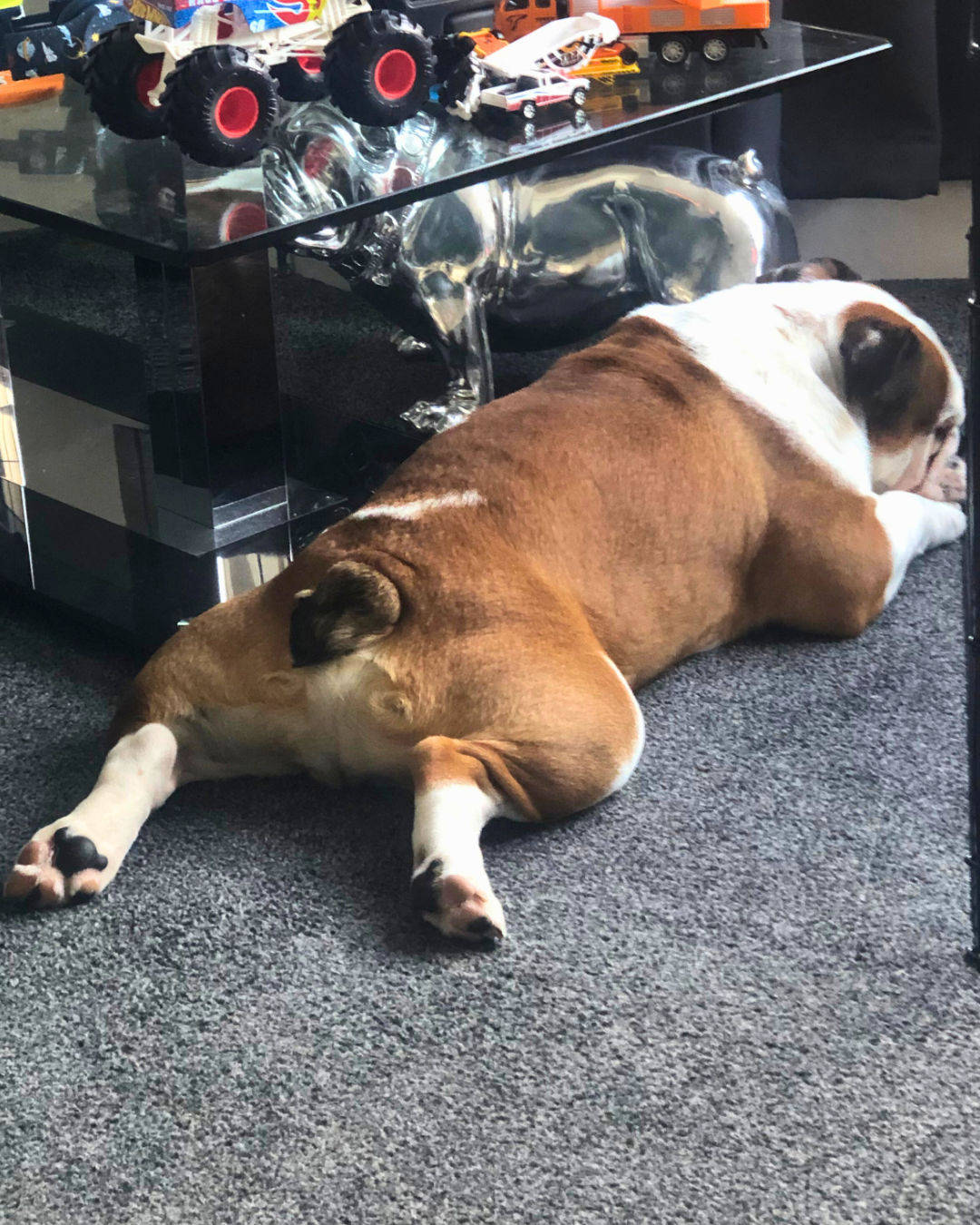
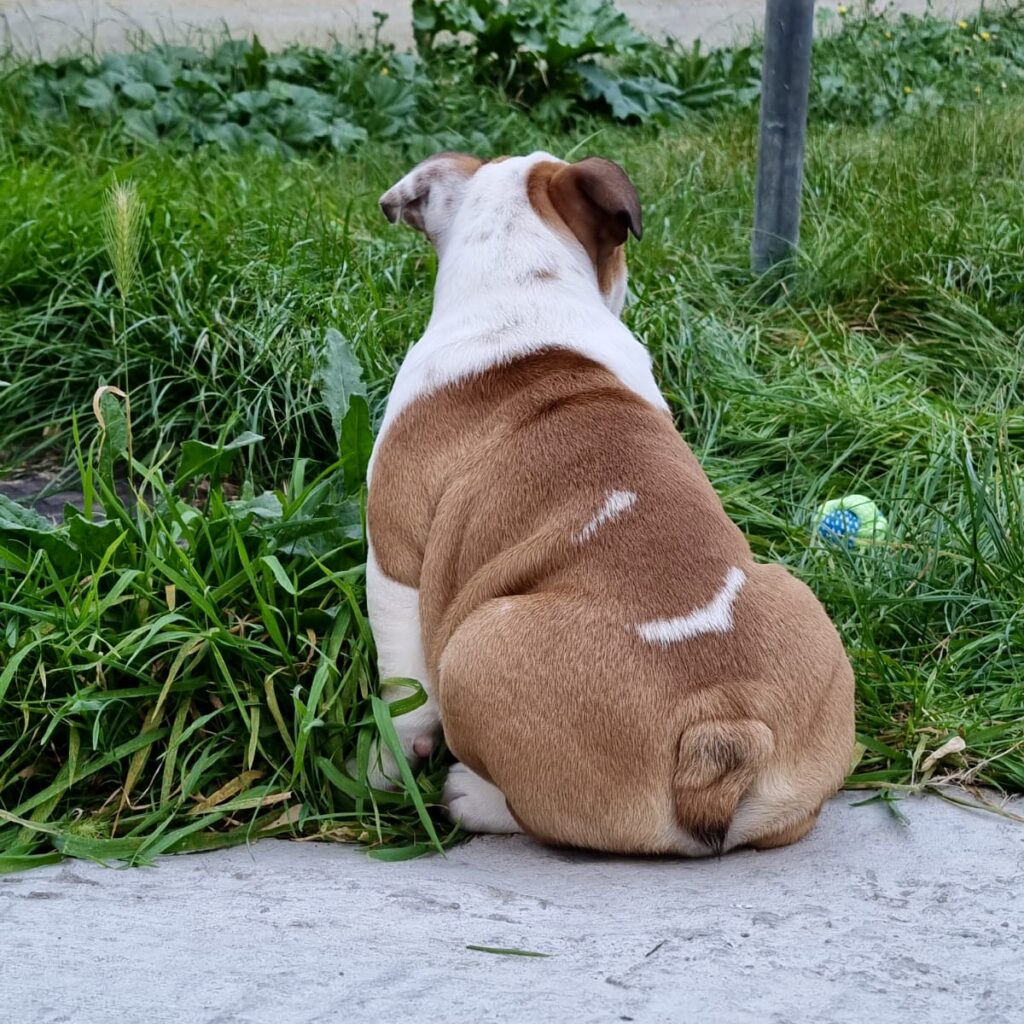
The floor flop (as I like to call it) is a sneaky little thing that bulldogs (and other dog breeds) do when they don’t want to follow your commands. The front and legs splay out, and the bully’s body is as close to the floor as they can get.
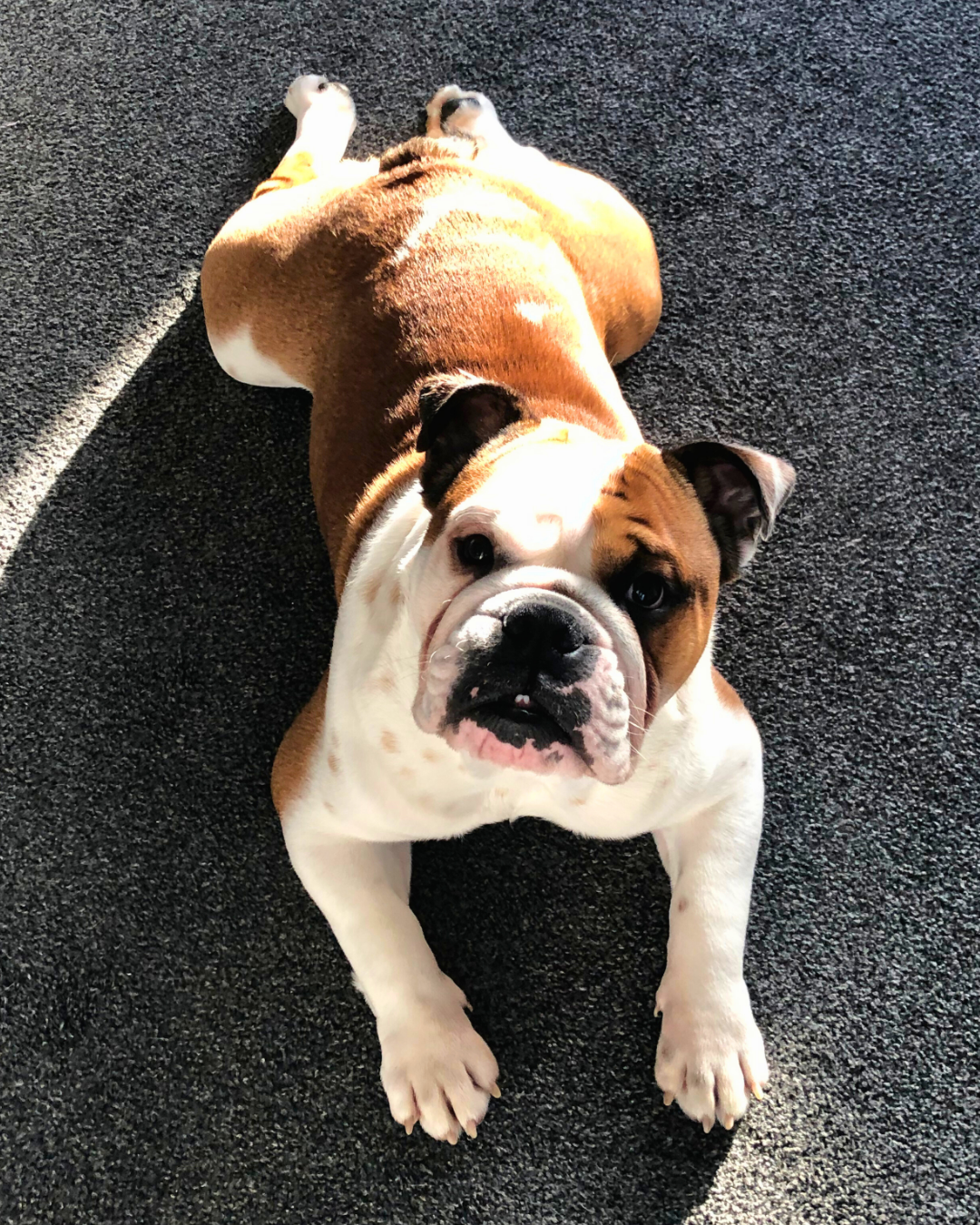
And they are virtually impossible to move once in the floor flop position. (Unless you have laminate flooring or similar, at which point, the bully slides quite easily.)
Selective moving
Circling back to the aforementioned point, bulldogs will stand their ground like no other dog breed – and they’ll put all of their mighty weight into it, too. That can be as much as 25 kg (55 Ib.)
If your bully doesn’t want to move, they probably won’t. As a bulldog parent myself, there has been many a time that I’ve had to physically left the massive potato (bully) and move him to where I want him to go.
On the same note, there have been several times when we didn’t go for a walk because one or both of the bullies refused to move.
Sometimes, just sometimes, it’s too hot not to admit defeat.
Moving slowly
If your bulldog does move when they don’t want to, you can expect them to take as long as possible for absolutely no reason whatsoever, just to irritate you – the pet parent – right back.
Walking to the garden for potty time? A turtle would be quicker.
Need to go out for a quick walk on a busy day? Oh, they’ll slow you down by sitting, moving at 0.05 mph, and giving you a whole mouthy tantrum… just because.
Rushing to get them into the car? Good luck finding your bully. Good luck dragging or carrying them out the front door.
Not responding to treats
Bulldogs are food orientated… until they don’t want to be. Then, no number of treats will get them to do what you want them to do. You could create a line of treats out the back door, and your bully will still stand their ground, looking at you like you’re the insane one.
The run-and-hide
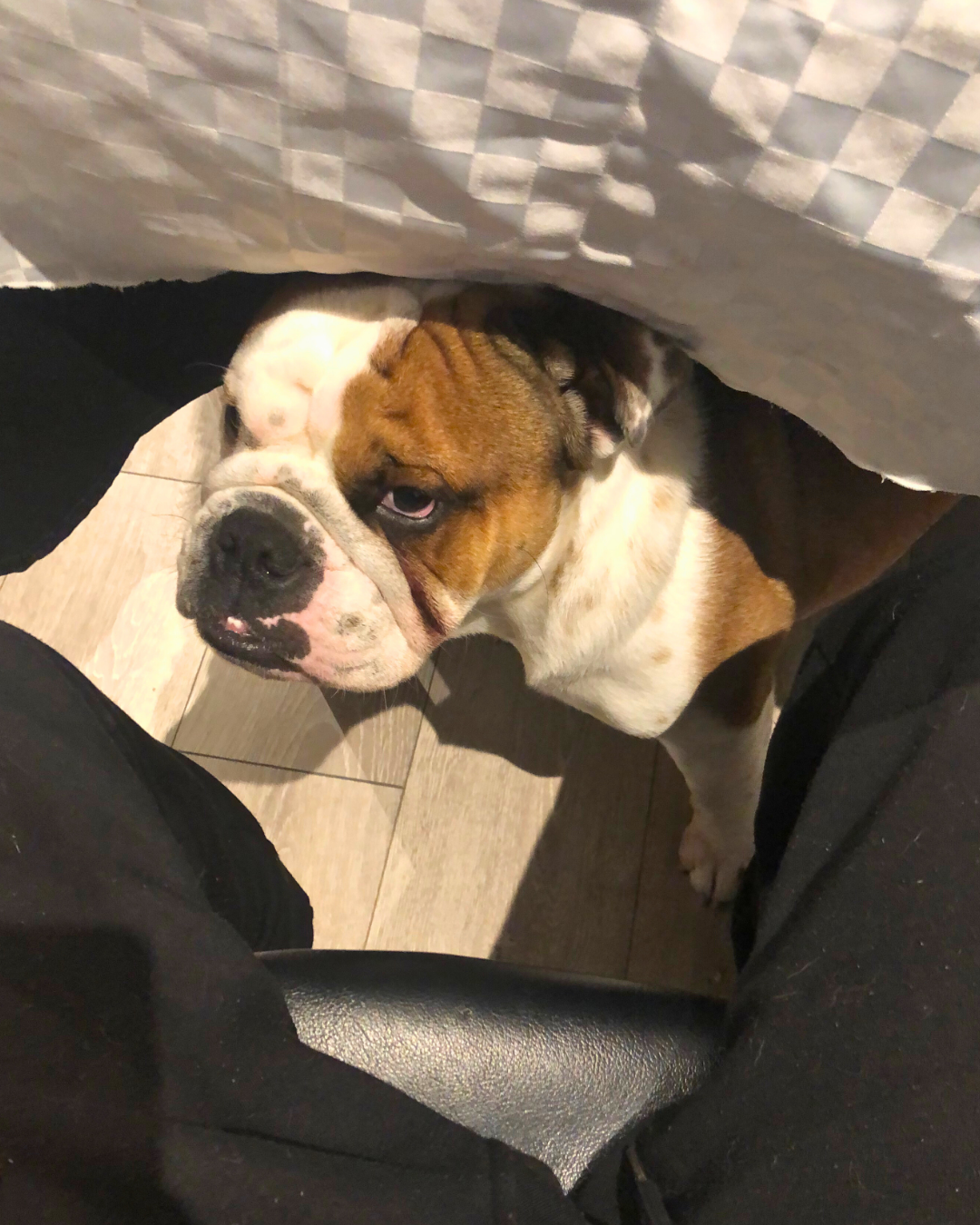
A slight jangle from the lead on a lazy day is enough to send my bullies running and hiding under the dining room table, bumping every chair out the way as they go. Then, they point blank refuse to come back out again.
Lorraine S wants to add:
“My bulldog, Frank, does that. He hides under the dining room table when he doesn’t want to do something. When we try to get him out, he runs to the other end of the house, then right back to the table again.”
Other hiding spots my bulldogs have chosen to avoid doing something include:
- Front room curtains – 8/10, I could still see them, but it was hilarious
- Behind the couch – 0/10, I thought I’d actually lost the dog
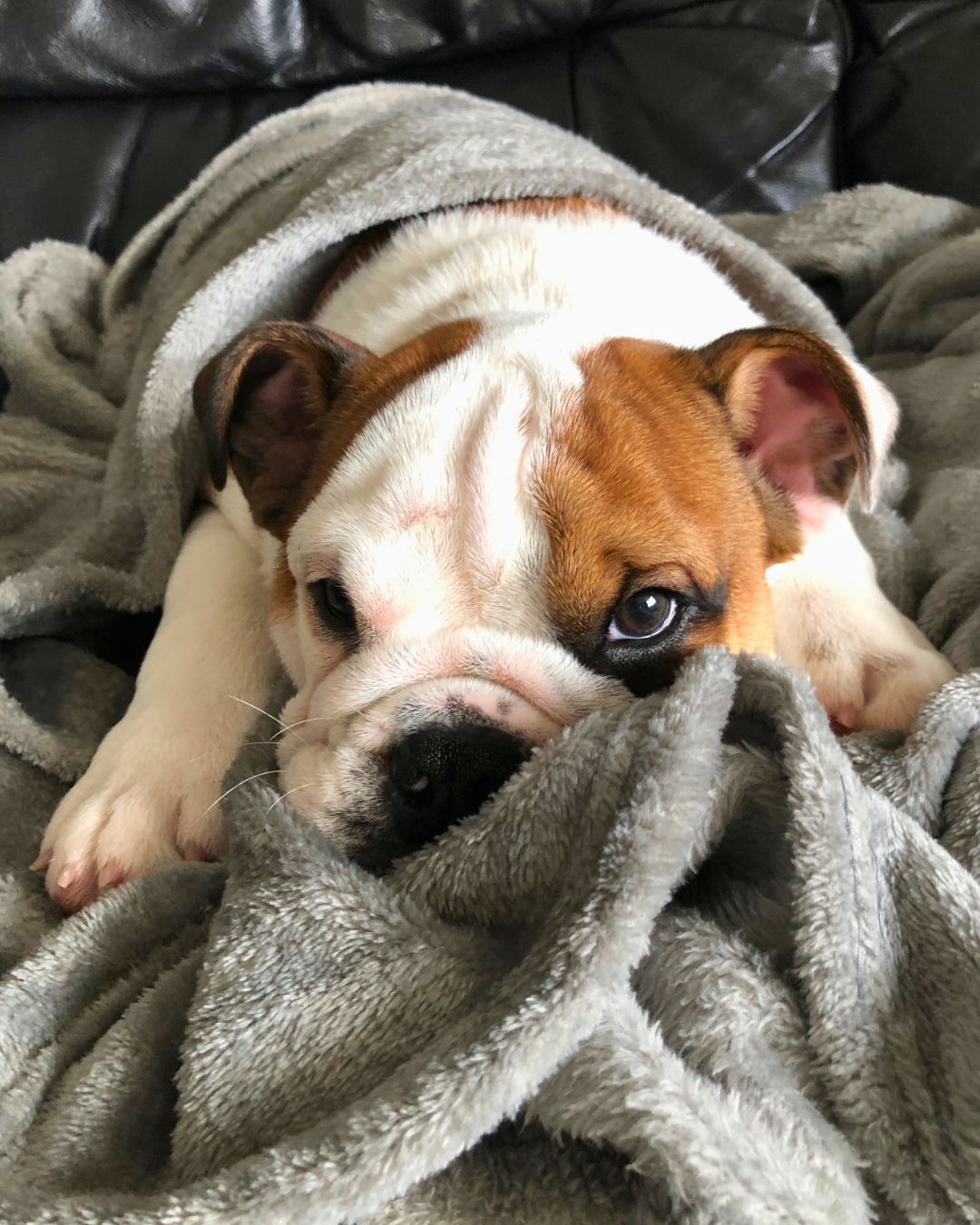
- Under a blanket – 3/10, wriggly butt gave the game away
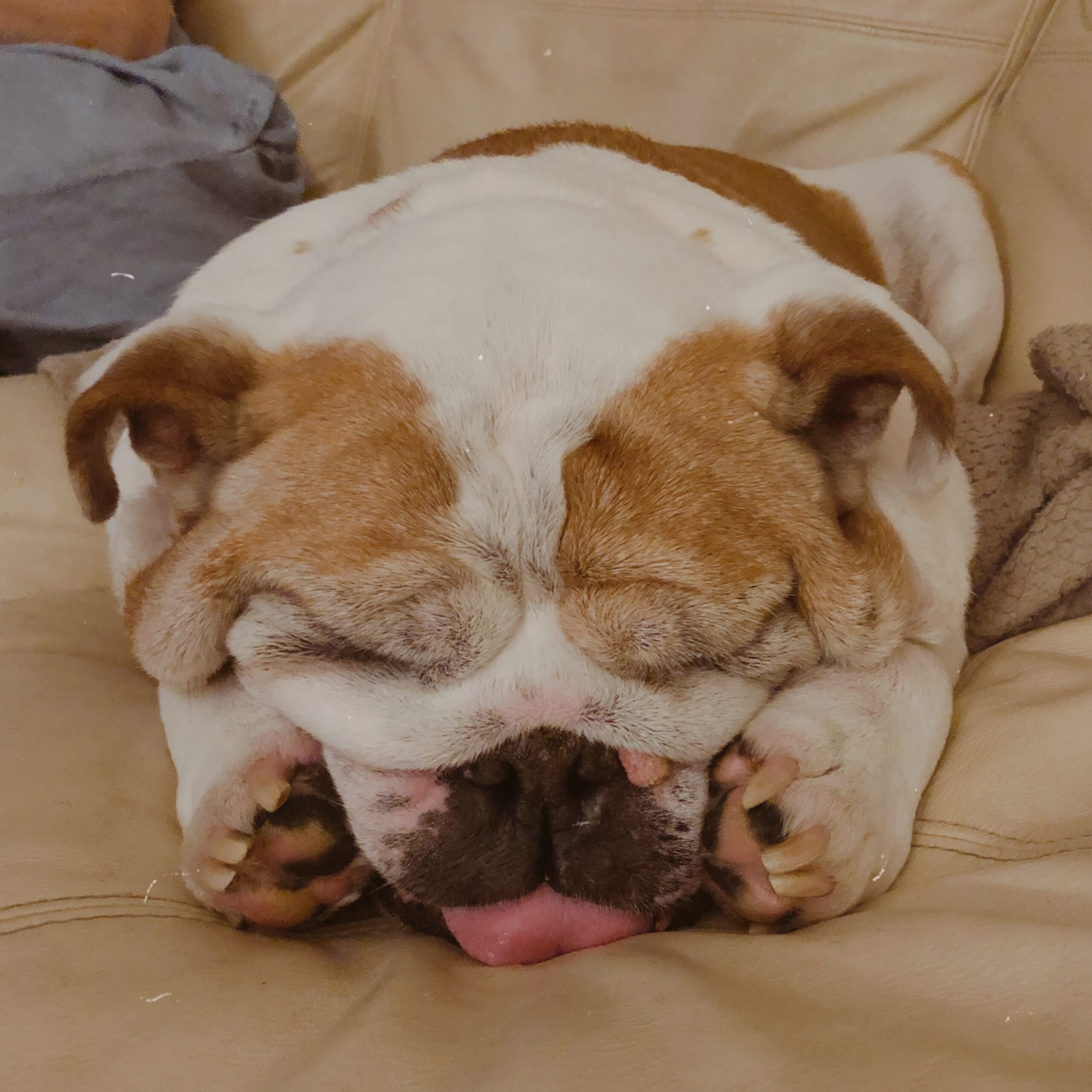
- Behind own front paws – 10/10, cutest thing I’ve ever seen
- Half-under the coffee table – 0/10, terrible hiding spot
Pet parents say:
What does your English bully do when they’re being super stubborn? Leave your comments below, and let’s help our soon-to-be English bulldog parents know what to expect!
Why are they like this?!
Unfortunately for pet parents, independent and intelligent breeds often display those mannerisms and characteristics at the worst possible times. English bulldogs are both of those things: fiercely independent (at times,) and super intelligent (even if you don’t quite believe it sometimes.)
These stubborn traits are not “bad.” They might occasionally appear at ‘bad’ times, but those traits aren’t inherently bad. They’re a combination of things, including:
- Breeding/genetics
- Autonomous thought
- Physical limitations
- Health limitations
- Different motivational requirements or needs
If you were to put a bulldog next to a whippet or greyhound, the latter is more likely to be motivated by sport or exercise. You wouldn’t expect a bulldog to run around a field like a greyhound (etc.) does, because they’re a different breed, with different limitations.
Bulldogs are more likely to experience things like the following when they partake in a lot of physical exercise:
- Pain in the joints
- Quickly overheating
- Fatigue or exhaustion
- Breathing difficulties
- Skin infections
Bulldogs were originally bred for bullbaiting, and the [cruel] sport required a lot of independent thinking, self-direction, and split-second decision making. Although modern-day bullies are a far cry from their now-extinct, hard-working cousins, they still display a lot of those original traits.
Dogs that were once bred for bullbaiting are likely to get bored with the same old exercises or activities every day, especially if those activities don’t seem to have a ‘purpose.’ Repetition might not bother some dog breeds, but bored bullies can result in super destructive bullies… and that, in turn, results in a damaged house!
As a side note, bulldogs are quite well known for being a manipulative breed. They will do whatever they need to do, to get what they want from you, the pet parent. They’re just as sneaky and mischievous as toddlers… and toddlers would eat everything and anything in the cupboard if they were allowed!
10 tips to train a stubborn bulldog
Learning how to train a stubborn English bulldog is very much learning how to work with their stubbornness rather than against it – and it’s easier to do than you’d think. Once you understand the background of English bulldog stubborn behaviour, you’ll understand how to better train and reward your pampered pooch.
Here, you’ll find some of my favourite tricks and tips to train a stubborn bulldog, collected from years of bully ownership and home training. Whether you’re dealing with a lazy flopper or a cheeky non-listener, I’ve got you covered.
Always stay calm and patient
If you get annoyed, your English bulldog will be able to tell that you are annoyed. As a result, they might play up, have a temper tantrum, or even feel fear towards you. Getting angry or frustrated will lead to more resistance and stubborn behaviour, not less.
Switch up training and commands
How do you think you would feel if someone stood in front of you and repeatedly said “spin” to your face? I don’t know about you, but it would anger me to no end. How do you think your bully feels when you do it? I’d imagine that they feel confused, frustrated because they don’t understand what you want, and perhaps even a little scared.
Switch up training and commands. Don’t just repeat the same phrase over and over again. Keep an eye on your dog’s body language, and if you feel yourself losing your cool OR your pet appears anxious or uncomfortable, walk away.
Nothing bad is going to happen as a result of your dog not learning how to “spin,” I promise you.
Something bad might happen if you push your pet to the limit of training and/or understanding.
Celebrate the wins!
When your English bulldog does the command that you’ve asked for, even if it’s a half-hearted attempt, celebrate it! Woohoo, cheer, clap, and praise your bully with your post affirming voice. This is called positive reinforcement, and it patterns puppies and dogs to behave positively in order to get that positive praise and feedback.
End the session on a high
When your bully does something right, then you praise and reward them… leave it there. Don’t push for more, don’t try to teach a little more, don’t attempt another trick; just leave it there. Give your pupper lots of praise, then let them go back to whatever they were doing before you started your training session.
Ending a training session on a high will stick in your dog’s mind a lot more than one that ended on a low.
Switch up treats and rewards
I wouldn’t like to eat the same treat every day, and I would imagine the same could be said for our four-legged friends, too. If your dog doesn’t see the treat as a treat, chances are they won’t find it worthwhile to perform the command.
Find a treat/treats that your English bulldog goes mad for, and use those as your training motivators. Switch things up from time to time, too. This will ensure that your dog doesn’t get bored of the same treat and again, not find it worthwhile.
You can find lots more information about how to train a stubborn bully when treats aren’t working right here: Why Treats Aren’t Working to Train Your Bulldog.
Use clear commands
Do not switch commands within one training session. Going from “sit” to “bark” in the same 5-minute period is going to confuse the heck out of your poor bully!
You also shouldn’t alternate between words and phrases. If your pup has learned “sit,” don’t then try to teach them “sit down.” This will confuse your poor pup.
Repeated commands are important… but not to the frustration point, as mentioned above.
Positive reinforcement only
You must not, under any circumstances, use negative reinforcement to train your bulldog – or any other animal.
Negative reinforcement includes things like:
- Inflicting fear through physical/verbal abuse or shouting
- Removal of toys, bed, food, water, or other doggy items*
- Holding back love, affection, attention, training, walks, etc.*
- Locking away in one room or area*
*for long periods of time.
Dogs do not react well to negative reinforcement. They can learn the ‘freeze-and-obey’ reaction, which means that they are literally frozen still with fear – from a pet parent, someone who is meant to love and care for them.
Alternatively, frightened, anxious, or stressed dogs can snap, bite, or become otherwise aggressive.
Negative reinforcement in situations where a bulldog doesn’t get enough care or attention, can reinforce the idea that they need to behave in ANY way – whether that’s good OR bad – just to get some attention from you. No attention is bad attention for the pet at that point.
Some important reading about the importance of positive over negative reinforcement for English bulldogs and other dog breeds can be found on the American Kennel Club website.
Maintain eye contact
Eye contact with your English bulldog is important when training them, as body language is just important to them as vocal commands. Not only that but you can ensure that your bully is definitely paying attention. If they’re looking at you, there’s a higher chance of them hearing, then understanding what you’ve said. If they’re not looking at you, their focus is more than likely elsewhere.
Check for health problems and injuries
Is your bully behaving in a way that is unusually stubborn, extra-stubborn, or just unusual in general? I highly recommend checking them over for things like bumps, scratches, grazes, and other injuries – and if the problem persists, take them to a vet for a checkup. It could be the case that something other than stubbornness and headstrong traits is behind the behaviour.
You know your bully better than anyone else, so you’ll know what’s ‘normal’ for them and what’s not. Something that’s not normal, should be checked out for any potential underlying causes.
Manipulate them right back
As daft as this might sound, manipulating your English bulldog right back is a great way to get them to do the thing you want them to do, but they’re refusing.
Let’s imagine that you’re training your bully for a moment. If they get distracted, move away, play with something else, or don’t do the command, walk away. Just walk away.
Chances are your bulldog will come running right back after you.
You have just manipulated your English bully into doing what you want, by making them think it was their idea in the first place.
Is English bulldog stubborn behaviour a problem?
As a general rule, when properly trained, English bullies and their stubborn streaks don’t usually pose too much of a problem. Don’t we all moan about going for a walk sometimes? Don’t we all feel lazy and like we would like to stay in bed all day sometimes? We can’t exactly blame our four-legged friends for feeling the same, can we?
An untrained, stubborn bully can pose several problems for humans, the home, other dogs, and everyone and everything else around. Refusing commands, for example, can lead to hyperactive doggos that then bite and snap out of irritability. Dogs that aren’t trained on the lead can pull into the road, into oncoming traffic.
Over time, bulldog stubborn behaviour can become dangerous – not only for themselves but also for everyone else.
Conclusion: why is my English bulldog stubborn?
Stubbornness is practically a signature trait of this beloved British breed, but it’s not difficulty that’s making them that way: it’s just an expression of their fun, quirky, and headstrong personality. To love the breed, is to love the traits of the breed.
English Bulldog stubbornness isn’t a flaw; it’s a personality trait that reflects independence, sensitivity, and intelligence. When approached with respect, humour, and patience, their stubbornness becomes part of what makes them utterly lovable.
I hope these tricks help you to work with your English bulldog’s unique mindset without losing your own mind!